Grand Haven is where the Grand River meets Lake Michigan, and the channel it cuts is the single fact that organizes riding here. Two piers run out into the lake, a public state park beach sits on the south side and Ferrysburg sits on the north, and the wind decides which of those two beaches you drive to. Northwest — the most common strong wind on this coast by a wide margin — lights up the south side at the state park and City Beach. South and southwest send you across the channel to North Beach Park. It is open Lake Michigan, not a flatwater lagoon: real shorebreak, real waves in the fall, and 239 days a year with at least an hour of 15+ knot wind. That combination is why it works for three sports rather than one — kites and wings while it is blowing, and often a surfboard a few hours later on the same day, once the wind has backed off and left its swell behind.
Seasonal Conditions
Wind Patterns
Two engines drive Grand Haven, and they hand off in the middle of the year. From October through April it is frontal — systems crossing the lake deliver northwest and west at 17 to 25 knots, and the shore station 11 miles north measures 15+ knot wind in 42% of all November hours and 39% of December's. That is the strong season, and it is the reason the beach empties out just as the riding gets good. Summer is the quiet half: July and August sit around 8%, and what saves them is thermal.
The Grand Haven thermal is worth learning to read, because it is invisible in a raw forecast. Watch for a light northeast morning. A northeast forecast looks like a throwaway — and in raw statistics it very nearly is, at 0.6% of all windy hours, the rarest direction on the rose by a factor of five. But on a sunny summer day that weak offshore flow gets overrun by the lake breeze, and the afternoon turns northwest and gusts into the low twenties. Those are some of the best summer sessions of the year, and the riders who get them are the ones who did not write off the morning.
The channel is the whole map. Northwest, west and north — 58% of every windy hour measured here — are side-on to the south side, so you park at Grand Haven State Park or City Beach. South and southwest, another 34%, work on the north side at North Beach Park. Between them that is 92% of the windy hours at this spot, and the only decision the wind is really asking you to make is which side of the piers to drive to.
Read that chart carefully, because it says something counterintuitive: the four windiest months at Grand Haven are the four you mostly cannot use. December through March out-blow everything else on the calendar, and shore ice closes the beaches through most of it. The window that actually pays is September to November — nearly as windy, water still warm into October, and the summer crowds gone after Labor Day. Bar height is scaled to the busiest month, and every bar carries its own measured percentage.
Petal length = % of 15+ kt hours • NDBC MKGM4 • 7-yr avg 2019–2025
Kite · Wing · Surf
Three Sports, One Shoreline
Grand Haven is not a kite spot that happens to get waves. The same weather does three different jobs here, and which board you bring depends less on the beach than on where you are in the life of a system.
The default on any day over about 15 knots. Northwest, west and north put you side-on at the state park and City Beach; south and southwest send you across the channel to North Beach Park. The pier leaves flat patches beside it, which is as close to flatwater as this shoreline gets — everywhere else you are riding real Lake Michigan chop.
The sport that unlocks the summer here. July and August only reach 15 knots about 8% of hours, and a wing on a foil gets going in wind a kite cannot use — which turns the light thermal afternoons from a write-off into a session. It also handles the shorebreak launch better than a kite does on a crowded beach, because there are no lines to lay out and nothing overhead.
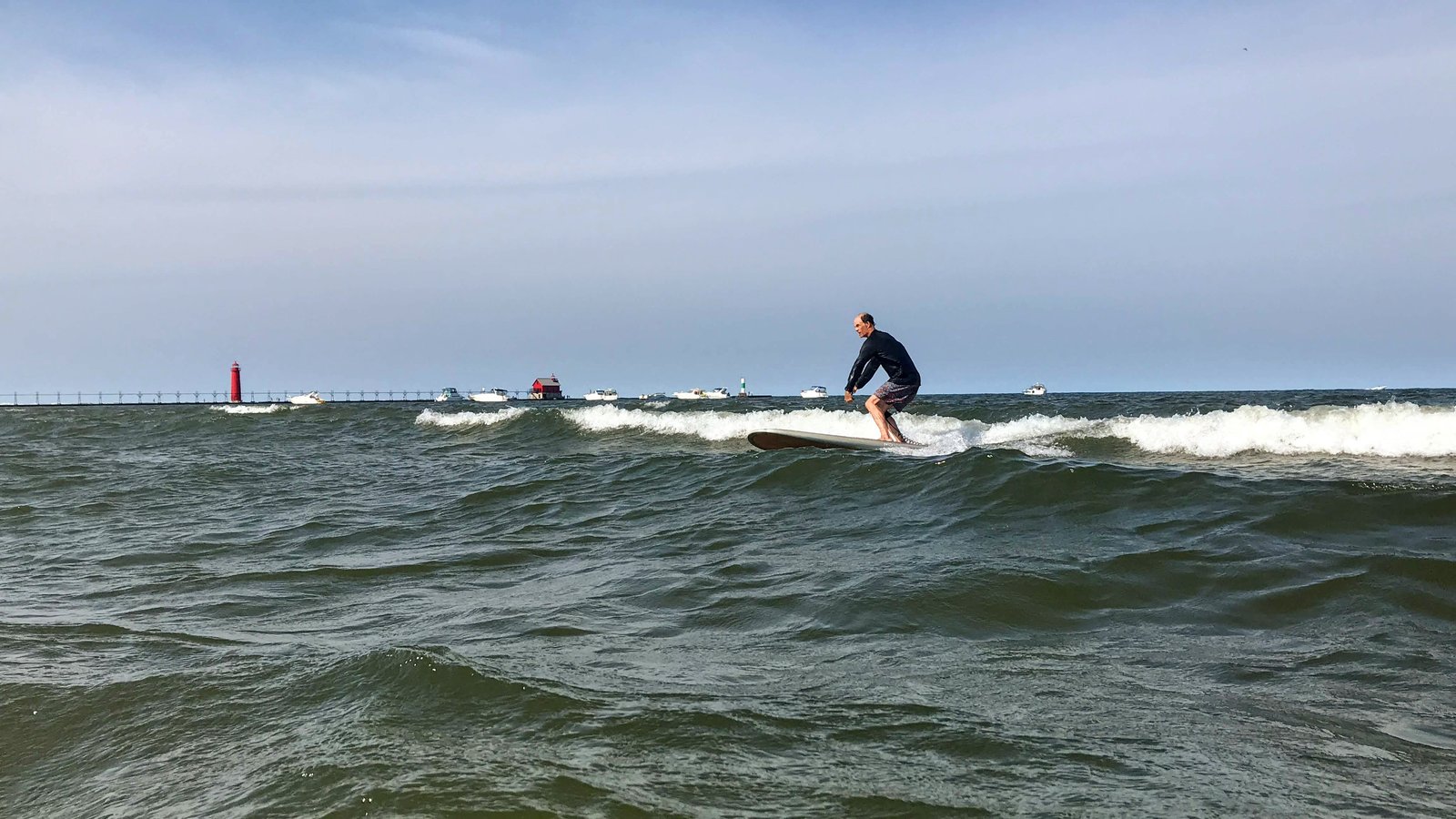
Great Lakes swell has no fetch memory — it is built by the wind blowing right now and it dies within hours of that wind stopping. So it is a same-day wave, and the sweet spot is the tail of the event: right after the wind eases off. While it is still howling the water is a mess of wind chop; when it backs down the chop settles first and the swell is still marching in behind it. Wait too long and it is gone. Fall is the season, the water is often still warm into October, and south winds build the wave on the north side.
The one thing worth internalizing about a Great Lakes spot: the wave and the wind are the same event, and the wave outlives the wind by only a few hours. There is no groundswell arriving from a storm a thousand miles away, so you are not waiting for tomorrow — you are watching today's wind for the moment it starts to drop, because that is when the chop cleans up and the swell is still there. Watch the wind forecast for the surf, not a swell model.
Spot Guide
Launch Points Map
Every launch from Ferrysburg down to Port Sheldon, roughly 20 miles of shoreline. Tap a pin for wind direction, skill level and parking.
All 7 Launches
The Spots — North to South
North Beach Park (Ferrysburg)
The public north-side beach, and your answer on any south or southwest day — a third of the windy hours on this coast. It sits far enough up from the channel that you are clear of the pier traffic, and it is the spot to drive to when the private beach closer to the pier has people on it. County park, real parking lot, no access argument to have with anyone. It is also where the south-wind wave shows up — the north side picks up a rideable one when the south side is flat.
The Private Beach North of the Pier
On a south wind this is the best patch of sand in Grand Haven, and it is private — the signs are not subtle and there are a lot of them. Riders do use it. The rule locals hold each other to is simple: if there are people on the beach, do not rig a kite here. Drive to North Beach Park instead — you cannot walk it, because the shoreline between the two is private the whole way. That courtesy is the only reason the spot still works at all, and one rider ignoring it costs everyone the access.
Grand Haven State Park
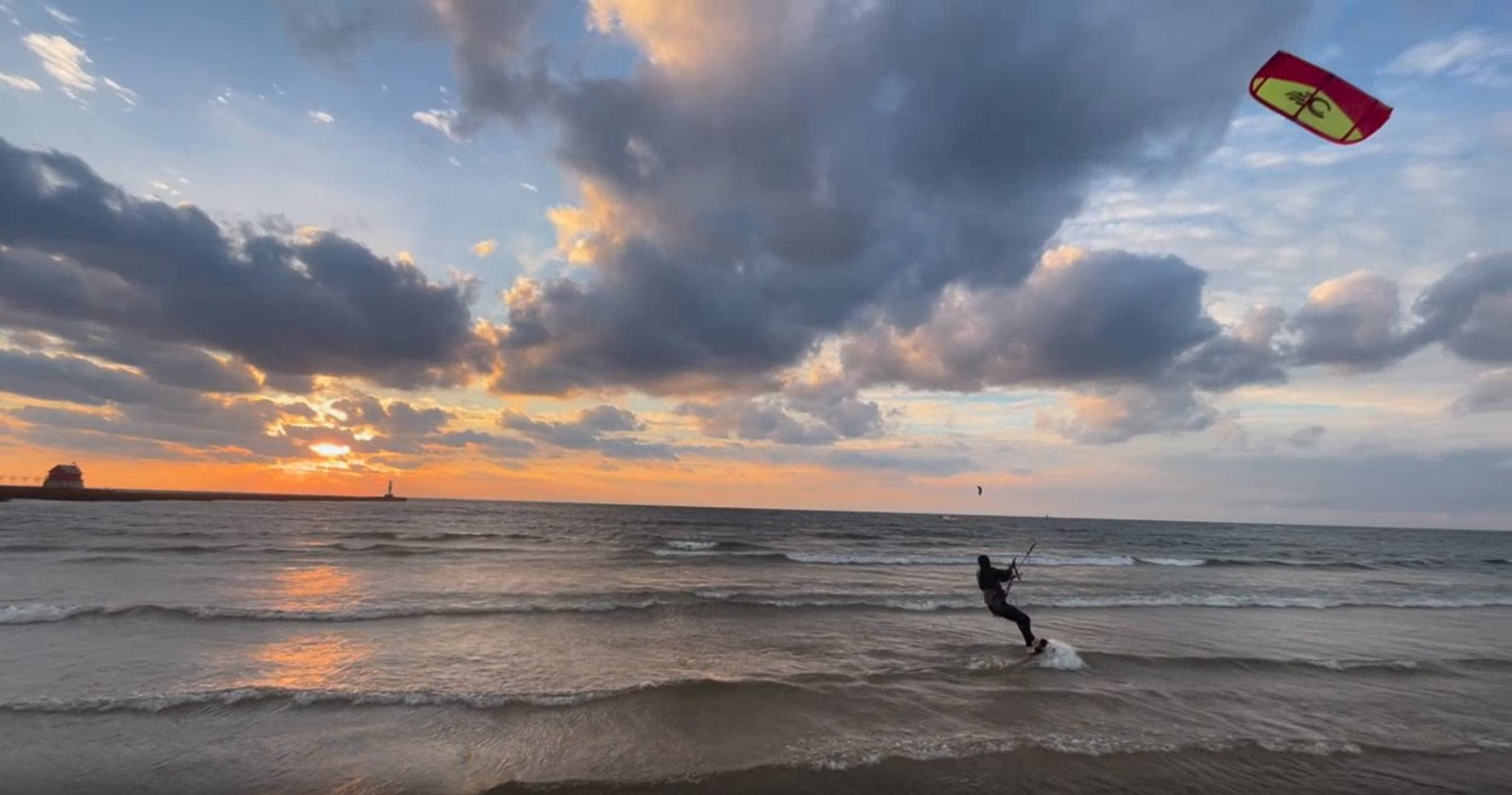
The main event. Northwest is the most common strong wind here and this is where it puts you — side-on, right beside the south pier and the lighthouse. Park by the pier. The surfers gather around the beach house and work out from there, or move closer to the pier as the swell builds, so on a wave day give them room and launch down the beach. The pier itself cleans up the waves and leaves flat patches alongside it, which is the closest thing to butter that Grand Haven offers.
Grand Haven City Beach
The other south-side option, a little further down from the channel and the second place to park on a north or northwest day. Same wind, same water, usually a bit more room to lay out lines than right at the state park. It is also the start of the classic run: City Beach to Port Sheldon is the Grand Haven downwinder, and northwest is the day to do it. Set your shuttle before you rig.
Rosy Mound Natural Area
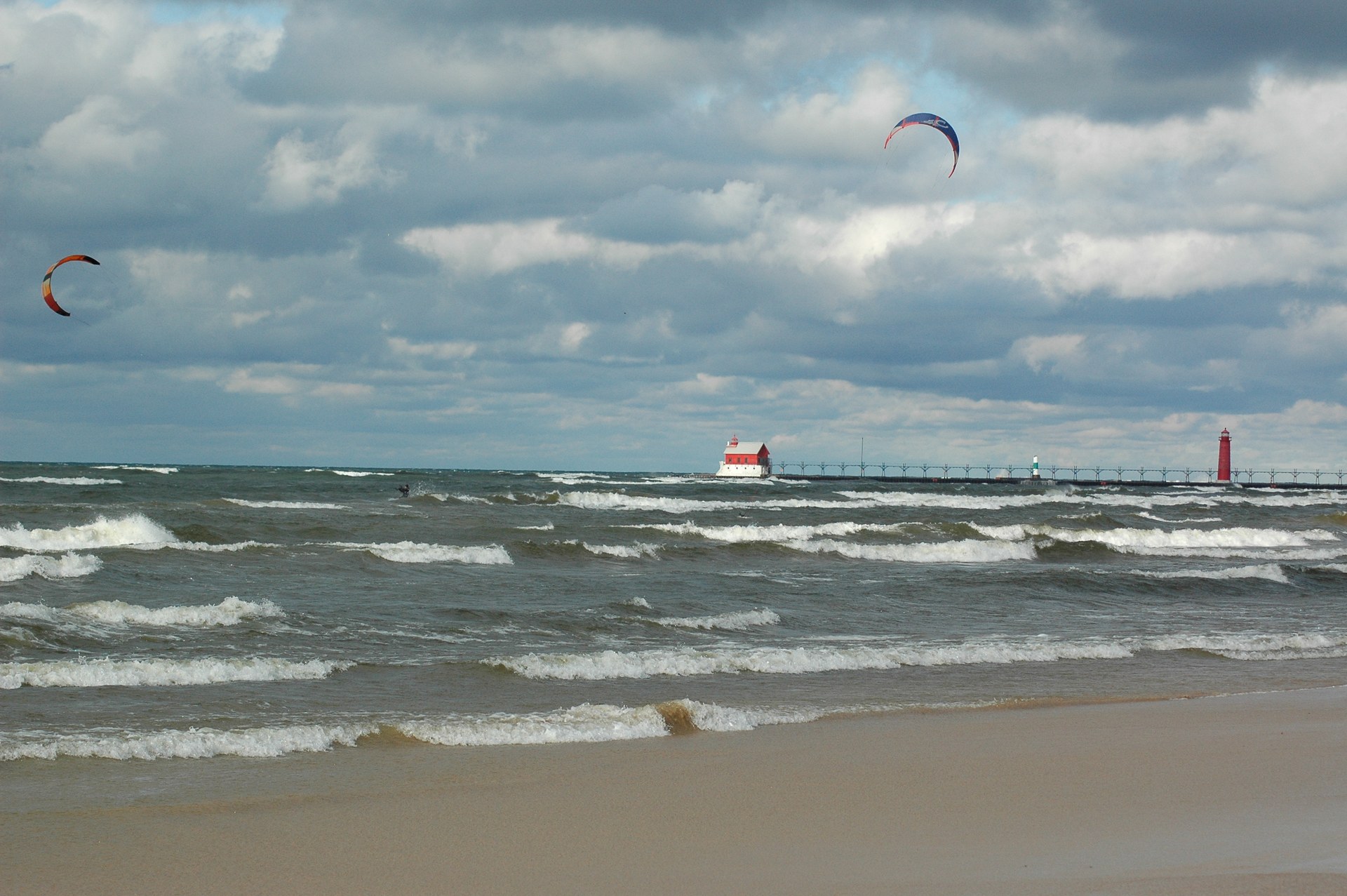
Ottawa County park about four miles south of the channel, and a genuinely quiet stretch of beach on a busy summer weekend. The trade is the walk: the access is a long stair-and-boardwalk climb over the dune, which is a real consideration when you are carrying a board, a bar and a pumped kite. Worth it when Grand Haven is full of people.
Kirk Park
Another Ottawa County beach further south again, on the same northwest wind as everything else on this side. Smaller crowd, dune access down to the sand, and a fair mid-point if you are working your way down the shoreline rather than committing to the full downwinder.
Port Sheldon
The far end — roughly eleven miles south of the channel, and the exit point for the City Beach downwinder on a northwest day. Rideable in its own right, but most of the people you meet here on a windy afternoon arrived by water rather than by car.
Safety Intel
Hazards & Local Rules
- The beach just north of the pier is private. Signed heavily. Ride respectfully, and if people are on the beach, use the public North Beach Park instead — and drive to it, because the shoreline in between is private as well.
- Red flags mean nobody is supposed to be swimming — watersports are still fine. But a red flag day is a big day, and it is telling you something about the shorebreak and the current even if it does not apply to you directly.
- The channel is working water. Boat traffic runs between the piers all season. Do not park yourself in it, and be conscious of where you will end up if you have to body-drag.
- Fishermen have the piers and a good share of the beach, especially on the north side. You are sharing the space and sometimes competing for it. Lines and kite lines are a bad mix — give them a wide berth.
- Summer crowds are the real access problem. Grand Haven is a busy beach town in July and August and finding room to lay out lines is genuinely hard. Windy days thin the crowd, and after Labor Day it clears out dramatically.
- East and northeast are offshore. They are also rare — northeast is 0.6% of all 15+ knot hours here. If a summer morning shows light northeast, treat it as a thermal setup to watch, not as a session to ride out into the lake on.
- Shore ice closes the beach most winters. December through March are the windiest months on record and mostly the least usable. Ice shelves are undercut and unstable — do not walk out on one to launch.
- Spring water is cold long after the air warms up. A 60°F April afternoon over 40°F water is a hypothermia setup, not a boardshorts day.
Gear by Season
What to Bring
Kite: 9m + 12m
Wing: 5m
Surf: Shortboard, but the waves are flatter than fall
Suit: Early spring a 6/4 hooded with gloves and boots; by late spring a 4/3 and you can start dropping the accessories.
Kite: 12m + 14m, and a foil or 17m for the light days
Wing: 5m + 6m — the tool that makes this season rideable
Surf: Longboard or a foil; real waves are rare
Suit: 3/2 or a shorty, and by late summer often nothing at all.
Kite: 8m + 10m, 12m for the light end
Wing: 4m + 5m
Surf: Shortboard — this is the season for it
Suit: Wetsuit gear comes back out — 3/2 early, and by late fall you are back in 6/4.
Mostly off limits — shore ice closes the beaches in all but a mild winter. If it is open: 6/4 hooded, gloves, boots, and kites a size down from what the forecast suggests, because cold air is dense.
Local Knowledge
The Vibe
Grand Haven has a great crew and a friendly crowd — that is the real reason people keep coming back. It is also the home of MACkite, which is worth knowing if you need lessons, a repair or a demo without driving somewhere else for it.
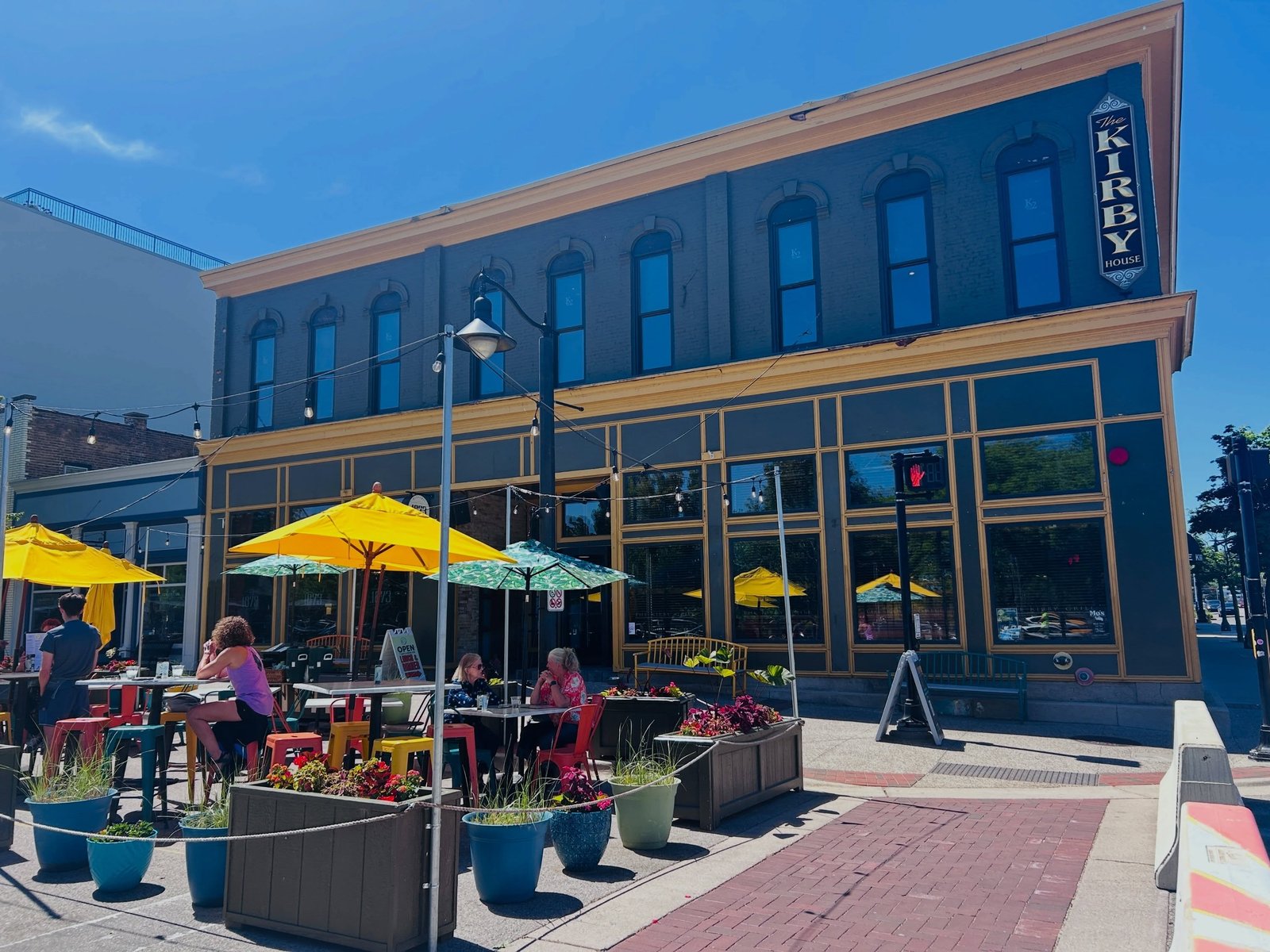
The town itself is a proper beach town. The Musical Fountain runs on summer nights and there are concerts down by the waterfront; downtown has a social district, so you can walk between places with a drink. Grand Armory Brewing and Odd Side Ales are the two breweries. For food, Snug Harbor sits on the water and the Kirby House is the downtown standby — and Pronto Pups, the corn dog stand on the boardwalk, is a genuine local institution and non-negotiable after a session. Honest take: Grand Haven is not a food destination. It is a great atmosphere and a great beach town, and you come for the water and the people.
On parking: for a north or northwest day, either Grand Haven State Park right by the pier or City Beach. In July and August the hard part is not the wind, it is finding a piece of sand big enough to lay out lines. After Labor Day that problem disappears — which is the same moment the wind starts to fill in for the fall. It is not a coincidence that the locals' season and the tourist season barely overlap.
One week to plan around: the Coast Guard Festival takes over Grand Haven for ten days from late July into early August. The town is wonderful and completely full, and the beach and every parking space near it are gone. It lands squarely in the lightest-wind fortnight of the year anyway, so it costs you very little to ride somewhere else that week.
Rider FAQ
Frequently Asked Questions
When is the best time of year to kiteboard or surf Grand Haven?
What wind direction is best at Grand Haven?
Where can I legally launch a kite in Grand Haven?
Is Grand Haven good for beginners?
Is Grand Haven good for wing foiling?
Can you surf in Grand Haven, and when is it best?
Can you ride Grand Haven in the winter?
How our calls at Grand Haven actually scored.
Every night we lock in tomorrow's call for this spot. Every morning we score yesterday's against the HLNM4 meter. Both halves, last 90 days.
Scored on 267 rider-days: the call made the night before, against the meter 6am–6pm, wind-criterion alerts only, rideable meaning two or more hours at the rider's own floor with gust and direction as they set them. Nothing here is written by hand.
HLNM4, the morning after, Sun 27 Sep
What last night's forecast was worth
Yesterday the Holland meter topped out at 8.9 kt at 7 am. The night before, NWS had 7 kt, the corrected NWS — what Premium is served — 8.3. The other 4 models ranged 7.1–10.7 kt. We called it sleep against a 15 kt floor. The day never got there. The 7:00 am lake-breeze watch gave a lake breeze a fair chance, and it never fired.
How this was measured
One day is an illustration, not a record — a model that reads low every day will still land one. The number that means anything is the scored one over 90 days, in how our calls are graded. Over the 14 days in this card the call was right on 10 of the 14 that could be scored.
Each model row is the highest wind it forecast for the 6am–6pm window at this meter, taken from the freshest run that existed before midnight the night before — between 10 and 23 hours ahead, depending on the hour. A model with no run in that window shows no call; it is never filled in from a closer-range forecast. Raw rows are the provider's own numbers; NWS + this meter's bias is that forecast shaded by this station's own measured error. That correction is Premium: a Premium rider is served the corrected row, and a free or signed-out rider is served the raw NWS row above it. The meter's figure is the strongest reading of each hour from this station's stored observations. Hours over your floor are counted from those readings alone; rideable is the nightly scorer's verdict and also weighs gust, direction and waves, so the two numbers are not the same measurement and are never added. Knots throughout.
Never Miss a Session at Grand Haven
WindStoke watches the meters and the models and tells you when Grand Haven matches your gear and your wind — kite, wing or board. Set it once, including the northeast mornings that turn into northwest afternoons.
Get Free Wind Alerts